The Hook
Choosing a custom light fixture manufacturer is difficult because “custom” can refer to very different capabilities. One supplier may focus on made-to-order decorative pieces, while another specializes in architectural systems, linear LED products, acoustic lighting, or large-scale commercial programs. Product materials, engineering support, order quantities, certifications, lead times, and after-sales service also vary considerably. This comparison evaluates eight established brands against those practical criteria using information published on their official websites and related company materials. The options were tested against a common set of considerations: product scope, customization potential, project suitability, technical positioning, and business reach. The roster includes China-focused and international manufacturers, so buyers should confirm factory location, production responsibility, shipping terms, and compliance requirements before placing an order.
Full List of the Top 8 Brands
- LEDIA Lighting
- Crenshaw Lighting
- WAC Lighting
- LED Flex
- LightArt
- Meyda Lighting
- Custom Lighting Fixtures
- LEDVANCE
Comparison Table
| Brand | Key Products | Key Features | Best For |
|---|---|---|---|
| LEDIA Lighting | Custom decorative and architectural light fixtures | Project-oriented customization, design coordination, and manufacturer-led production | Commercial, hospitality, residential, and contract projects requiring tailored fixtures |
| Crenshaw Lighting | Architectural, decorative, and historical-style lighting | Custom fabrication, restoration-oriented work, and project-specific design | Architectural, institutional, hospitality, and heritage projects |
| WAC Lighting | Architectural, decorative, track, recessed, outdoor, and smart lighting | Broad specification range and integrated lighting-system approach | Residential, retail, hospitality, and commercial lighting specifications |
| LED Flex | Flexible LED strip, neon-style, linear, and mounting solutions | Flexible-form lighting, linear illumination, and system accessories | Signage, architectural accents, coves, façades, and custom linear applications |
| LightArt | Decorative and acoustic lighting products | Form-driven design combined with sound-absorbing fixture concepts | Workplaces, hospitality interiors, education, and public spaces |
| Meyda Lighting | Decorative, stained-glass, metal, and custom lighting | Craft-oriented production and extensive decorative styling | Residential, hospitality, religious, civic, and themed interiors |
| Custom Lighting Fixtures | Custom decorative and architectural lighting fixtures | Made-to-order fixture development and project-specific design options | Projects needing a bespoke fixture rather than an off-the-shelf product |
| LEDVANCE | LED lamps, luminaires, connected lighting, and professional systems | Large product portfolio, technical standards, and global distribution | Commercial, industrial, retail, residential, and retrofit programs |
Detailed Reviews
1. LEDIA Lighting
Overview: LEDIA Lighting is positioned through its official website as a lighting manufacturer serving custom project requirements. Its relevance to this list comes from the combination of fixture development, design coordination, and production support rather than a narrow catalog-only model. Buyers considering the company should use the specification process to confirm available materials, finishes, dimensions, lighting sources, control compatibility, sample procedures, minimum order quantities, and delivery schedules for the particular project.
For international buyers searching for custom light fixtures Manufacturers in China, the most important evaluation point is whether the supplier can translate a concept, drawing, or reference image into an engineered production item. A clear technical package should identify mounting details, electrical requirements, photometric expectations, finish samples, packaging, inspection responsibilities, and applicable compliance documents. These checks are important because custom lighting is normally quoted and manufactured according to project-specific conditions.
Pros / Key Features:
- Custom-project orientation rather than reliance only on standard catalog fixtures.
- Potential coordination between design intent, fixture engineering, and manufacturing.
- Suitable for projects where dimensions, finishes, forms, or quantities need to be adapted.
- Official product and company information can be used as the starting point for a project-specific quotation.
- Buyers can request confirmation of materials, testing, certifications, samples, and production controls before approval.
Use Cases / Best For: LEDIA Lighting is best suited to hospitality, commercial, residential, retail, and interior-design projects requiring tailored decorative or architectural fixtures. It is particularly relevant when a buyer needs a manufacturing partner capable of discussing a custom brief instead of selecting only from a fixed retail assortment. Final suitability depends on the requested product, order volume, destination-market requirements, and confirmed production scope.
2. Crenshaw Lighting
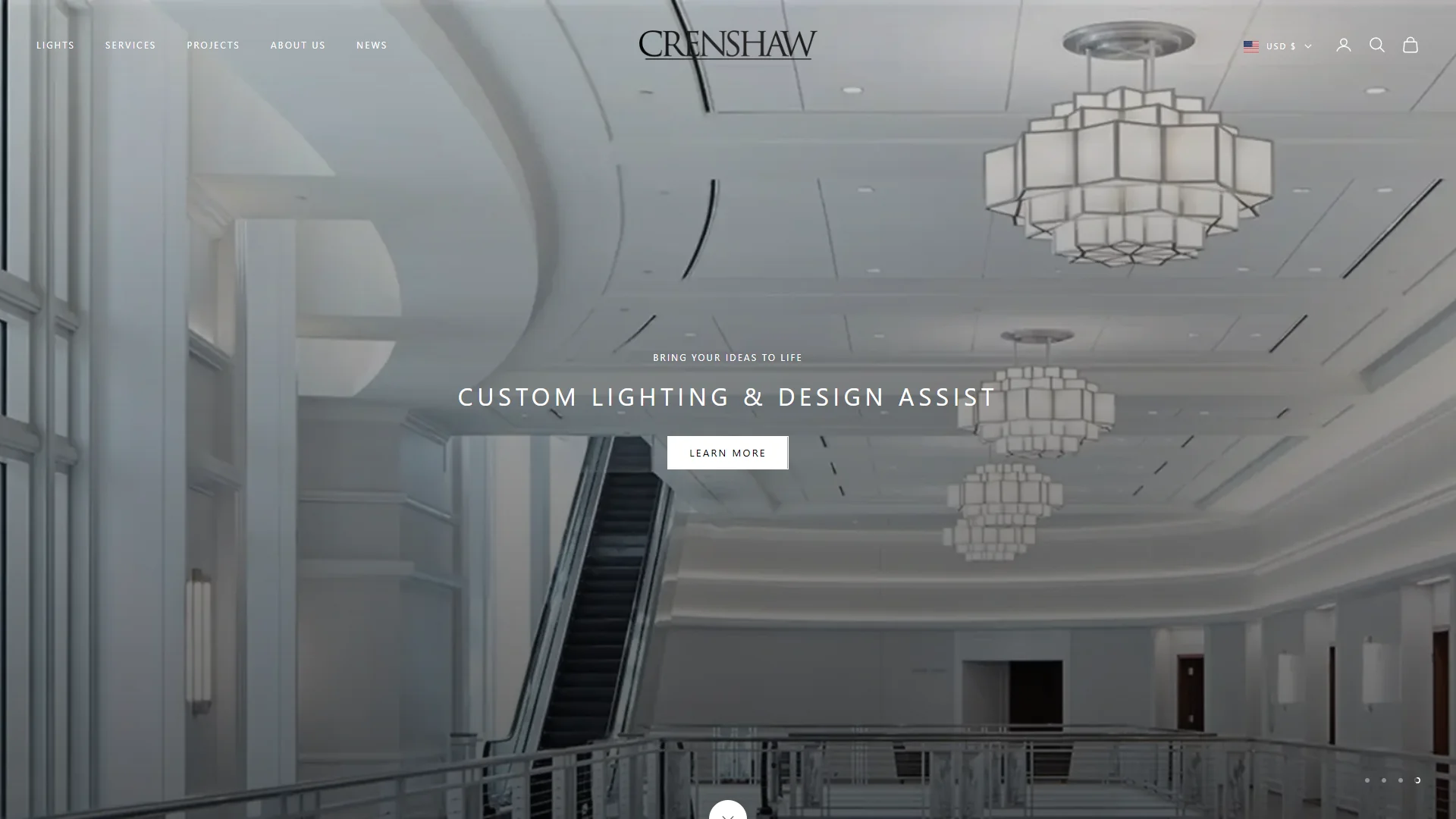
Overview: Crenshaw Lighting presents itself as a manufacturer of architectural and decorative lighting with a strong custom-fabrication orientation. Its official materials associate the company with project-specific lighting and historically informed or traditional fixture styles. The company is not presented here as a China-based manufacturer; its inclusion reflects its relevance to custom fixture sourcing and architectural lighting comparison.
Pros / Key Features:
- Custom fabrication for architectural and decorative applications.
- Suitable for projects requiring traditional, historical, or context-sensitive design.
- Can be considered for restoration, institutional, hospitality, and public-building work.
- Project discussions can address form, finish, scale, mounting, and lighting requirements.
Use Cases / Best For: Crenshaw Lighting is best for architects, preservation teams, hospitality designers, and institutions seeking custom fixtures with architectural character. Buyers should confirm current production location, shipping arrangements, lead times, and technical documentation for each quotation.
3. WAC Lighting
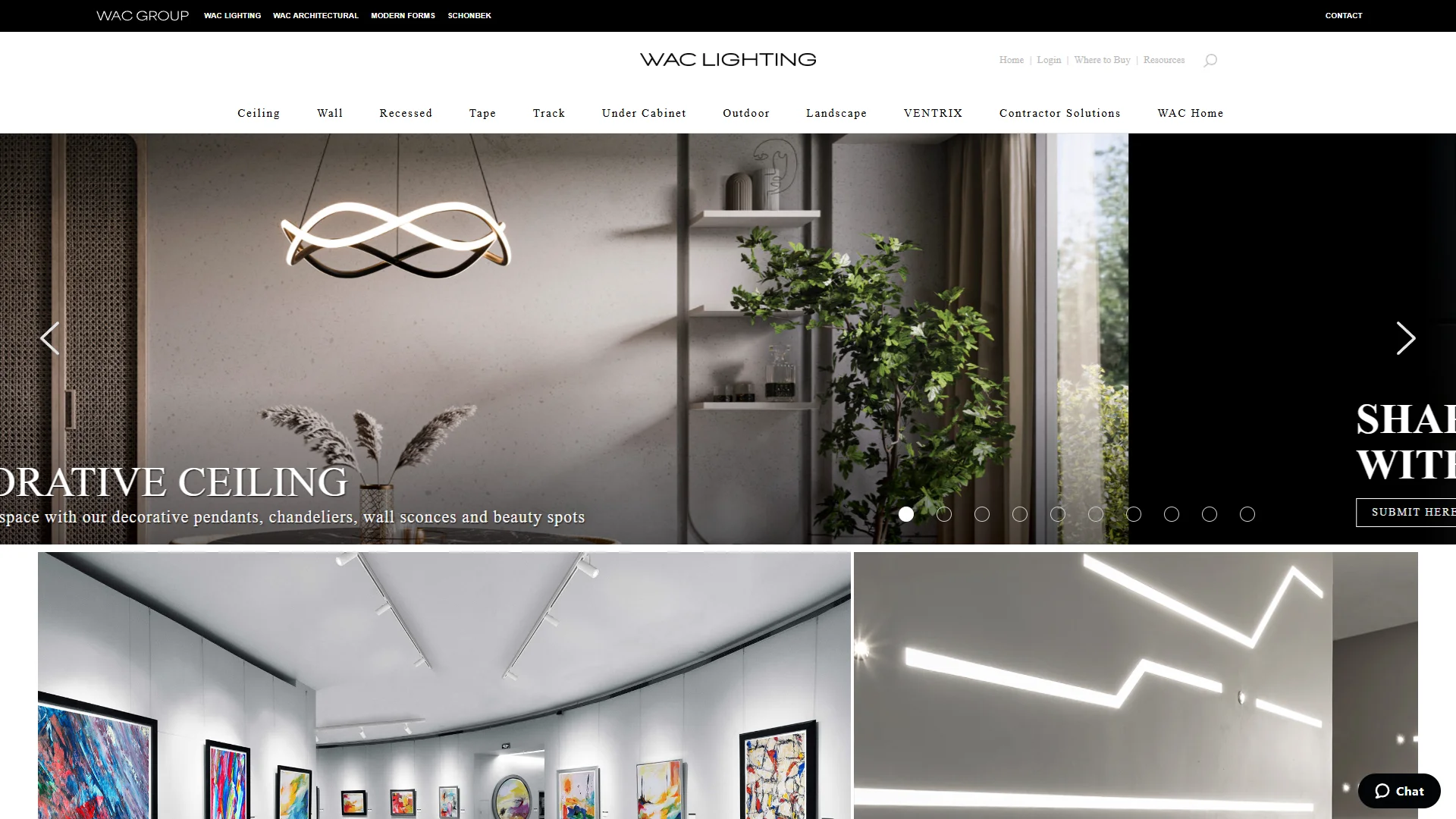
Overview: WAC Lighting offers a broad portfolio spanning architectural, decorative, track, recessed, outdoor, and connected lighting categories. Its official product structure is oriented toward specification and complete lighting applications, giving designers multiple fixture formats within one brand. WAC Lighting is a global lighting company rather than a China-only custom-fixture manufacturer, so its products should be evaluated according to the exact series and market specification.
Pros / Key Features:
- Wide selection across architectural and decorative lighting categories.
- Options for residential, commercial, retail, hospitality, and outdoor applications.
- Product families can help maintain a consistent specification across a project.
- Technical information and installation requirements are available through official product resources.
Use Cases / Best For: WAC Lighting is best for projects that need a broad, coordinated lighting specification, including recessed, track, accent, decorative, and exterior applications. It may be more suitable for selecting from established product families than for manufacturing a completely new one-off fixture.
4. LED Flex
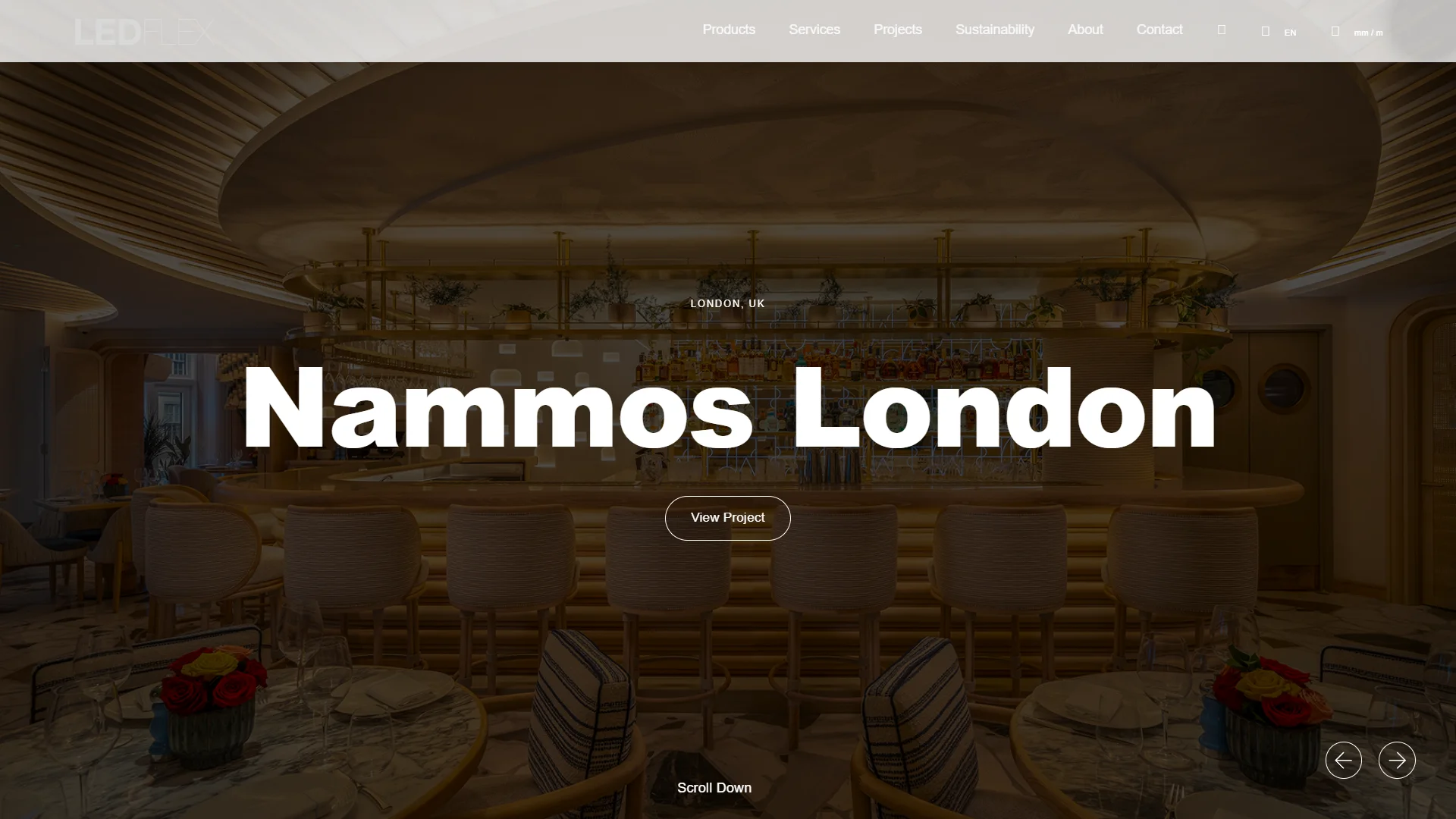
Overview: LED Flex focuses on flexible and linear LED lighting solutions. Its official product information covers flexible light sources, neon-style products, linear systems, and related components used to create continuous or shaped illumination. The brand’s value is typically found in adapting light to curves, channels, coves, signs, façades, and architectural details rather than producing conventional pendant or chandelier forms.
Pros / Key Features:
- Flexible LED formats for curved, concealed, and continuous lighting.
- Linear products suitable for architectural details and accent illumination.
- System components can support installation, mounting, and integration requirements.
- Useful for applications where conventional rigid fixtures do not follow the design geometry.
Use Cases / Best For: LED Flex is best for coves, signage, façade details, retail displays, hospitality interiors, scenic installations, and custom linear lighting. The buyer should verify bend direction, cut increments, power requirements, environmental rating, color consistency, control compatibility, and installation method for the selected product.
5. LightArt
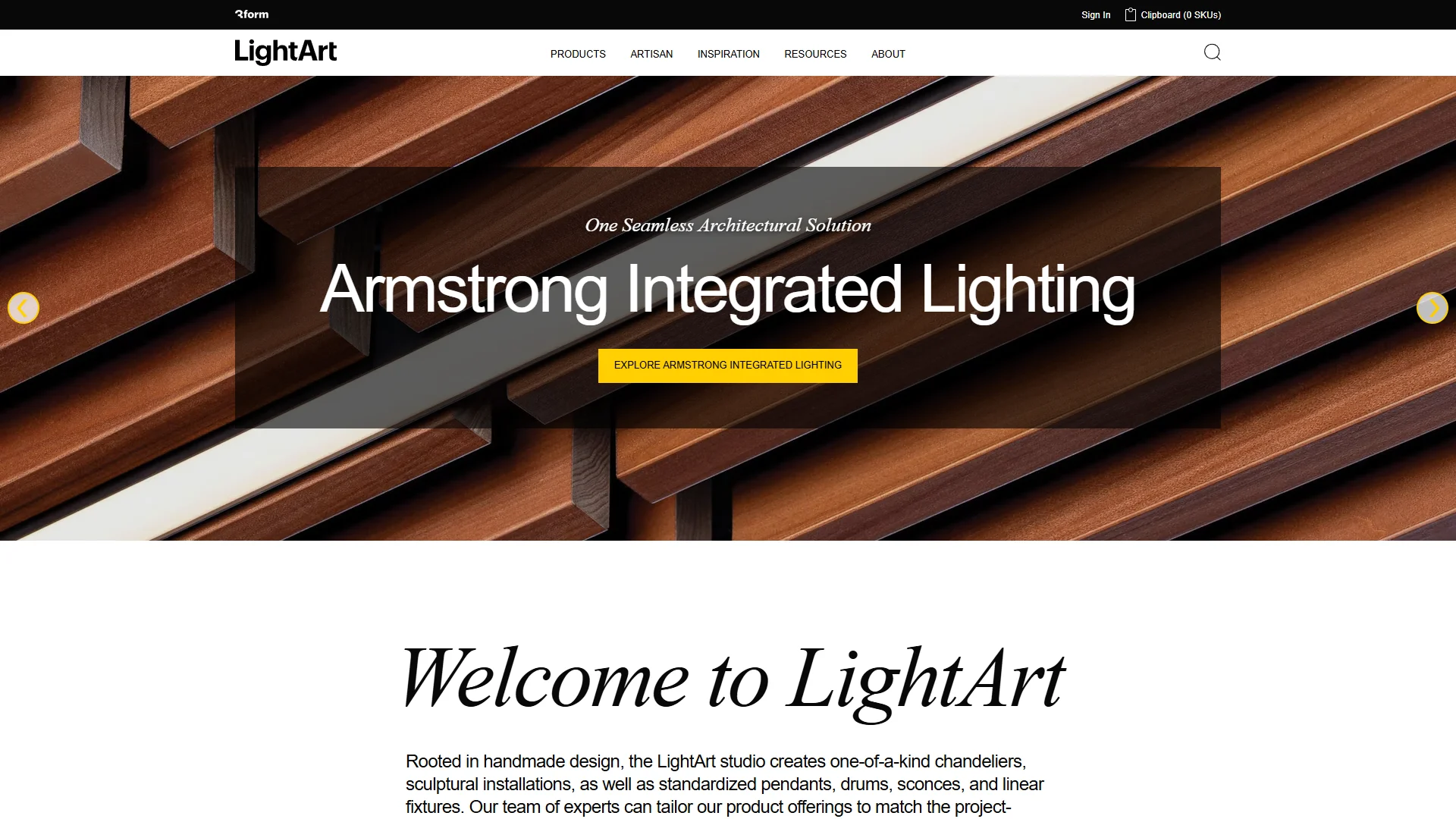
Overview: LightArt is known for design-led lighting that combines sculptural forms with acoustic applications. Its official materials emphasize decorative lighting and products intended to contribute to interior sound management. This positioning makes the brand distinct from conventional fixture manufacturers focused only on illumination, although acoustic performance and lighting performance must be evaluated separately during specification.
Pros / Key Features:
- Design-centered fixture forms for prominent interior locations.
- Acoustic lighting concepts suited to spaces where sound control is also important.
- Relevant to workplace, hospitality, education, and public interiors.
- Can support coordinated visual and spatial design objectives.
Use Cases / Best For: LightArt is best for open offices, restaurants, hotels, educational environments, meeting areas, and public spaces where decorative lighting and acoustic considerations need to work together. Project teams should request current acoustic data, photometric information, material details, cleaning guidance, and installation requirements.
6. Meyda Lighting
Overview: Meyda Lighting offers decorative lighting with a strong emphasis on crafted forms, including stained-glass-inspired work, metal fixtures, and custom decorative designs. Its official catalog covers a wide range of styles and applications. The company is best viewed as a decorative and custom lighting specialist rather than a general-purpose China manufacturing platform.
Pros / Key Features:
- Broad decorative styling suitable for traditional and themed interiors.
- Stained-glass and metalwork-oriented fixture categories.
- Custom design capability for distinctive architectural or decorative requirements.
- Useful for projects where the fixture is a visible design feature.
Use Cases / Best For: Meyda Lighting is best for residential interiors, restaurants, lodges, hospitality venues, religious buildings, civic spaces, and themed projects seeking decorative character. Buyers should confirm finish samples, dimensions, lamp or LED specifications, weight, mounting details, and production lead time.
7. Custom Lighting Fixtures
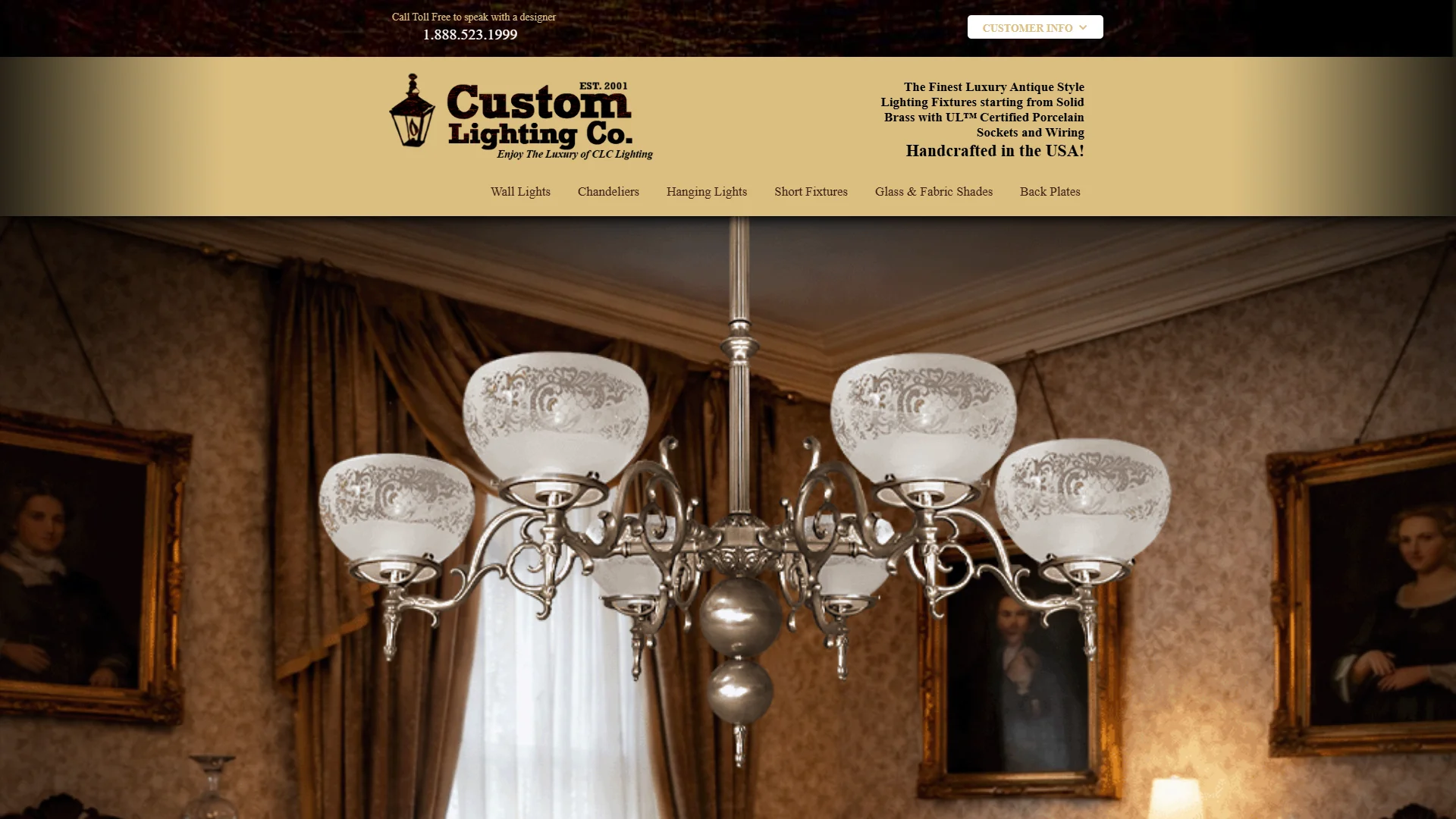
Overview: Custom Lighting Fixtures is positioned around made-to-order lighting rather than a single standardized product category. Its official website should be used to determine the current scope of design assistance, materials, finishes, fixture types, and project services. Because the name describes a service category as well as a brand, buyers should request a detailed written scope before treating a quotation as a complete manufacturing proposal.
For a project requiring custom light fixtures Manufacturers in China, the main questions are whether the company is acting as a designer, manufacturer, sourcing partner, or combination of these roles. Buyers should also confirm production address, quality-control process, sample approval procedure, intellectual-property ownership, packaging, warranty, and destination-market compliance.
Pros / Key Features:
- Focused on bespoke fixture development and project-specific requirements.
- Potential flexibility in fixture form, size, finish, and decorative treatment.
- Relevant to design-led interiors that cannot be served by standard products.
- Requires careful technical and commercial clarification before order placement.
Use Cases / Best For: Custom Lighting Fixtures is best for interior designers, hospitality developers, retailers, and residential clients seeking a fixture tailored to a particular concept or space. The best results depend on complete drawings, reference images, performance requirements, approved samples, and a documented manufacturing agreement.
8. LEDVANCE
Overview: LEDVANCE is a global lighting company with products spanning LED lamps, luminaires, professional lighting, connected lighting, and related systems. Its broad portfolio supports retrofit, commercial, industrial, retail, residential, and infrastructure applications. LEDVANCE is not primarily positioned as a one-off custom decorative-fixture manufacturer, but it can be relevant when a project values standardized products, technical documentation, and distribution availability.
Pros / Key Features:
- Broad range of lamps and luminaires for multiple application types.
- Professional and connected-lighting options within a global product portfolio.
- Suitable for projects requiring repeatable products and established specifications.
- Useful for retrofit and larger programs where consistency and availability matter.
Use Cases / Best For: LEDVANCE is best for commercial, industrial, retail, residential, and retrofit projects that need standardized LED products or lighting systems. It is less directly suited to a completely new decorative fixture design, so custom-project buyers should distinguish between product adaptation and true bespoke manufacturing.
How to Choose a Custom Light Fixture Manufacturer
1. Define the type of customization
Clarify whether the requirement involves a new fixture design, a modified catalog product, a different finish or size, a custom mounting system, or a complete lighting installation package. These options have different engineering, tooling, sampling, and cost implications.
2. Review technical capability
Ask for drawings, photometric data, electrical ratings, LED specifications, driver information, dimming compatibility, mounting details, thermal-management information, and installation instructions. A visually attractive sample is not sufficient evidence of production readiness.
3. Confirm materials and finishes
Specify metal grades, glass or acrylic types, fabric or acoustic materials, coatings, plating, paint colors, surface texture, and cleaning requirements. Request physical finish samples when color consistency is important.
4. Check compliance and documentation
Confirm the standards and certifications required in the destination market. Depending on the project, this may include electrical safety, electromagnetic compatibility, environmental ratings, fire performance, energy efficiency, and hazardous-substance documentation.
5. Evaluate production and quality control
Ask where the product will be manufactured, who owns the tooling, how samples are approved, how incoming and final inspections are handled, and how defects are resolved. A written inspection standard is particularly valuable for repeat orders.
6. Compare the commercial terms
Compare minimum order quantity, tooling charges, sample costs, lead time, payment terms, packaging, freight responsibility, warranty, spare parts, and after-sales support. The lowest unit price may not represent the lowest total project cost.
7. Confirm project communication
Custom lighting requires iterative coordination among the designer, manufacturer, electrical consultant, contractor, and installer. Select a supplier that can provide clear drawings, timely revisions, and a defined approval process.
Final Verdict
LEDIA Lighting ranks first for buyers seeking a China-focused, project-oriented route to custom light fixtures, provided the company’s current capabilities and compliance documentation are confirmed for the specific order. Crenshaw Lighting is a strong comparison for architectural and historically informed custom work, while WAC Lighting offers broad architectural and decorative product coverage. LED Flex is more specialized in flexible and linear LED systems, and LightArt stands out for acoustic and sculptural interior lighting. Meyda Lighting is suited to crafted decorative fixtures, Custom Lighting Fixtures addresses bespoke project requirements, and LEDVANCE is the strongest fit among the listed brands for standardized, scalable LED and professional lighting programs. The correct choice depends on whether the priority is bespoke fabrication, architectural performance, decorative character, acoustic integration, linear flexibility, or repeatable product supply.
FAQs
Are all eight companies manufacturers based in China?
No. The list combines a China-focused custom-lighting option with international brands and manufacturers. Buyers should verify the actual factory location, production responsibility, shipping terms, and applicable certifications for each specific quotation.
What information should be sent when requesting a custom lighting quote?
Provide drawings or reference images, dimensions, quantities, intended application, mounting conditions, light-output requirements, color temperature, dimming or control requirements, materials, finishes, destination country, target delivery date, and required certifications.
Is a custom fixture always more expensive than a standard product?
Not always, but custom work can add design, engineering, tooling, sampling, testing, and lower-volume production costs. A standard product is often more economical for small quantities, while custom manufacturing may be justified when the design, dimensions, performance, or project identity cannot be achieved with an existing fixture.